


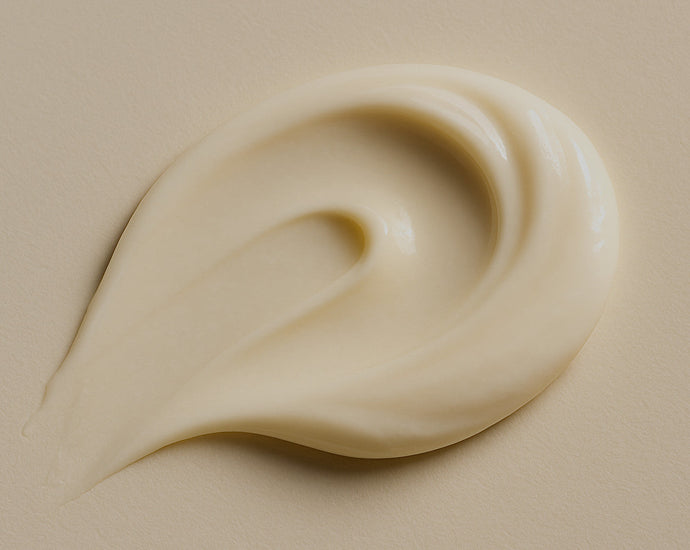




























What an amazing scent and luxurious lotion! I never run out!
This is a lovely product that I am never without! It also makes a great gift!
Love the smell. I enjoy using it every day!

By Rebecca Martin, skincare expert & founder of Conscious Skincare
If you are wondering whether jojoba oil for skin is worth adding to your routine, the short answer is yes — especially if you want a lightweight, skin-friendly oil that can help balance, soften and support the skin barrier without feeling heavy. Jojoba oil is one of the most versatile natural oils because it closely mimics the skin’s natural sebum, making it a useful choice for dry, sensitive, combination and oily skin types.
In this updated guide, we’ll look at the key jojoba oil benefits, how to use jojoba oil on the face, whether it clogs pores, and why cold pressed jojoba oil is a simple but valuable addition to a natural skincare routine.
If you are comparing facial oils, you may also find our guide to choosing the right facial oil helpful.
If you want to try jojoba oil on your face, you do not need to change the rest of your routine. Start with just 1–3 drops on clean, slightly damp skin. You can use it alone, layer it with a serum or moisturiser, or simply apply it to areas that feel dry or tight.
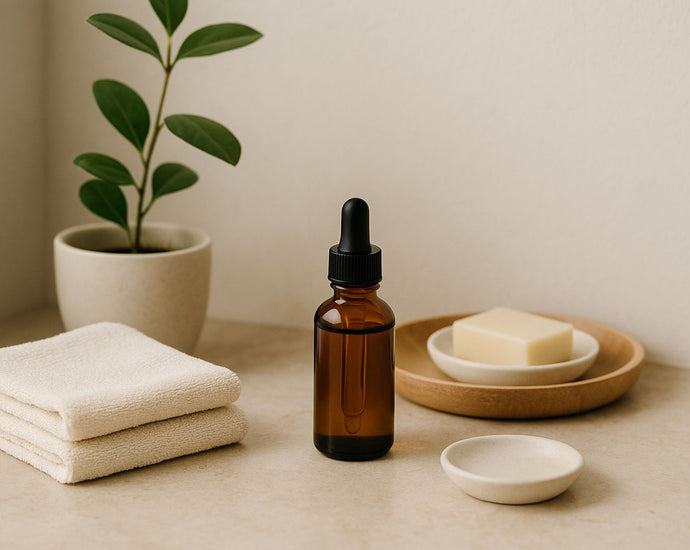
If you want to put the advice in this guide into practice, our Organic Jojoba Oil is the jojoba oil used throughout the routine examples below. Start with a small amount and adjust it according to how your skin feels — more is not necessarily better with facial oils.
Jojoba oil is technically a liquid wax ester rather than a true oil. This gives it a lightweight, non-greasy texture that absorbs easily and feels comfortable on the face. Because its structure is close to the skin’s own natural oils, jojoba is often well tolerated by people who find heavier oils too rich.
It is naturally rich in vitamin E, antioxidants and essential fatty acids, all of which help soothe, protect and strengthen the skin barrier. Cold pressed jojoba oil is especially valued because the oil is extracted without high heat or harsh chemical processing, helping to preserve its natural profile.
For more on why extraction method matters, read our guide to cold pressed oil for skin.
The main jojoba oil benefits for skin are balance, hydration, comfort and versatility. It can be used alone, blended into a routine, or layered with a serum or moisturiser depending on your skin type and the time of year.

Yes — jojoba oil is good for skin because it is lightweight, gentle and suitable for many different skin types. It is especially useful if your skin feels unbalanced: oily in some areas, dry in others, or easily unsettled by heavier creams and oils.
As with any new skincare product, patch test first if your skin is very reactive or if you are prone to sensitivity.
Jojoba oil for face use works best when you want a soft, flexible finish rather than a heavy oil layer. It can help skin feel smoother and more comfortable while still feeling light enough for daily use.
Because it is not overly rich, jojoba oil is a good starting point if you are new to facial oils. It is also useful if you want a simple, fragrance-free oil that can be used across different seasons and skin moods.
For comparison, rosehip oil is often chosen for mature or uneven-looking skin, argan oil for richer nourishment, and bakuchiol oil for evening routines. Jojoba is the balanced all-rounder: lightweight, adaptable and easy to layer.
If you are searching how to use jojoba oil for face, start with a very small amount. A little goes a long way, especially when applying oil to damp skin.
How much jojoba oil should you use on your face? For most people, around 1–3 drops is enough for the whole face. Start with one drop if your skin is oily or congestion-prone, then add more only if your skin needs it.
You can use jojoba oil in the morning if your skin enjoys facial oils under moisturiser or SPF, but many people prefer it in the evening as a simple final step. If your skin is oily, try using one drop at first and focus on drier areas rather than applying generously all over the face.
Quick answer: jojoba oil can go either before or after moisturiser. If you want to use it as a final sealing step, apply it after moisturiser. If you prefer the oil to absorb first, apply it before your cream.
The easiest rule is to apply products from thinnest to thickest texture. Jojoba oil can be used either before or after moisturiser depending on how your skin feels and what else you are using.
There is no single perfect order for everyone. If your skin feels comfortable, soft and not overloaded, the routine is working.
One of the most common questions is: does jojoba oil clog pores? Jojoba oil is widely considered non-comedogenic, which means it is unlikely to block pores for most people. This is one reason it is often recommended for combination, oily or acne-prone skin.
That said, any skincare ingredient can disagree with individual skin. If you are very prone to congestion, use only a small amount, avoid layering too many rich products at once, and patch test before applying it widely across the face.
If you are using exfoliating acids, retinoids or strong blemish-focused products, keep your jojoba oil step simple. It can be a helpful comfort step, but it does not need to be over-applied.

At Conscious Skincare, our cold pressed jojoba oil comes in 100ml and 250ml refill sizes. It is fragrance-free, additive-free and ethically sourced — perfect for those simplifying skincare with natural, effective solutions.
Choosing a cold pressed oil matters because it helps protect the oil’s natural composition. If you are building a natural facial oil routine, you can also browse our cold pressed oils page for other single-ingredient oils, including rosehip, argan, sweet almond, hemp, apricot kernel and evening primrose.
Jojoba oil is especially useful if you want one simple oil that can support face, neck, body, cuticles or dry patches without feeling too heavy.

Jojoba oil hydrates, balances sebum, soothes inflammation and supports skin repair without clogging pores. It is lightweight, versatile and suitable for many face and body routines.
Yes. Jojoba oil can be used directly on the face. Start with 1–3 drops on clean, slightly damp skin and reduce the amount if your skin is oily or prone to congestion.
Yes — jojoba oil is non-comedogenic, antibacterial and anti-inflammatory, making it suitable for breakout-prone skin. Use a small amount and patch test first if your skin is reactive.
Yes — jojoba oil mimics natural sebum, which helps regulate oil overproduction and reduce shine. It is often a better choice for oily skin than heavier facial oils.
Apply 2–3 drops to clean, slightly damp skin after cleansing and toning. Massage gently, then follow with moisturiser if needed. Oily skin types may prefer using just one drop.
Apply after moisturiser to seal hydration, or before moisturiser if layering under a richer cream. Follow texture order: lighter products first, richer products last.
Yes — jojoba oil is gentle enough for daily use, including sensitive and combination skin types. If you are new to facial oils, start with a few times a week and build up gradually.
Jojoba oil is widely considered non-comedogenic, so it is unlikely to clog pores for most people. Use a small amount if your skin is oily or congestion-prone.
Jojoba oil is a gentle multitasking oil that works well for dryness, sensitivity, oil imbalance and daily barrier support. Its lightweight feel makes it especially useful if you want the comfort of a facial oil without a heavy or greasy finish.
If you want a simple place to start, try Organic Jojoba Oil after cleansing, or compare it with other natural oils in our guide to rosehip, argan, jojoba and bakuchiol.
Next step: use a few drops of jojoba oil when your skin feels dry, tight or unbalanced, and adjust the amount depending on how your skin responds.