By Rebecca Martin
Bakuchiol vs Retinol: The Quick Answer
Bakuchiol vs retinol is a useful comparison if you want to soften the look of fine lines, support a more even skin tone and care for mature or sensitive skin without automatically reaching for a traditional retinoid.
Retinol is a well-established vitamin A derivative. Bakuchiol is a plant-derived compound found in the seeds of Psoralea corylifolia, also known as bakuchi or babchi. Research suggests bakuchiol can offer some similar visible skincare benefits while being better tolerated by many people.
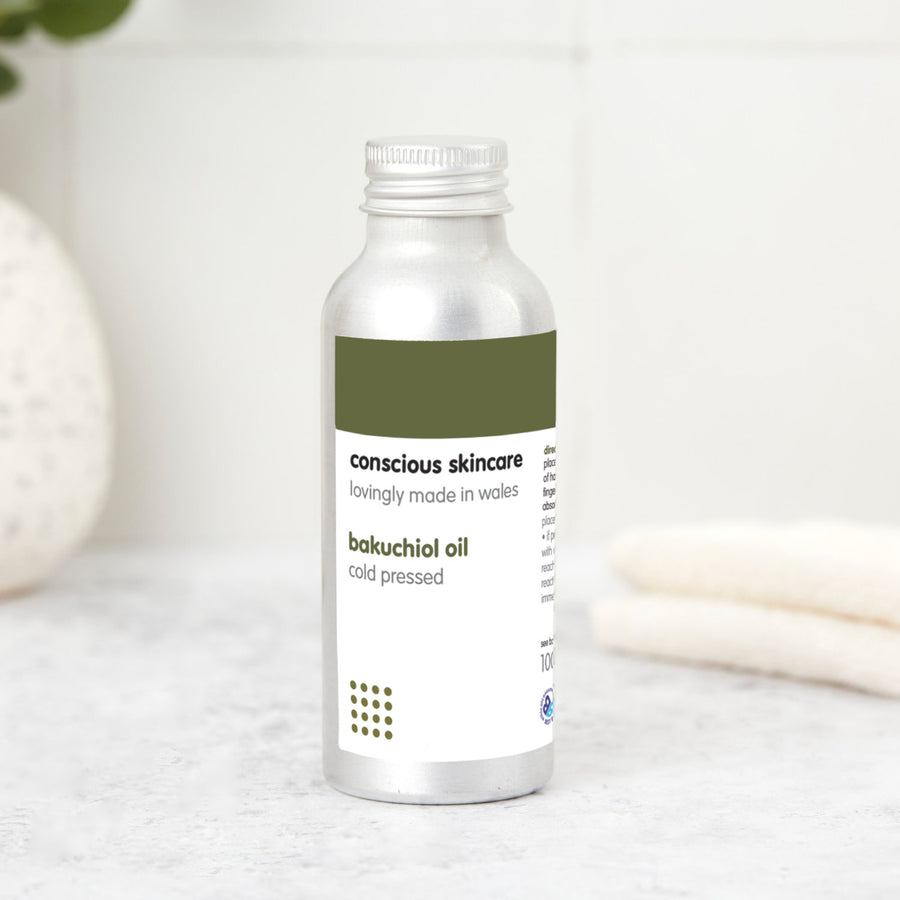
Looking for the simplest route? Our 100% pure Cold-Pressed Bakuchiol Oil is whole bakuchi (babchi) seed oil rather than a serum containing a small percentage of isolated bakuchiol. There are no added carrier oils, fillers or fragrance, and only 2–3 drops are needed per application.
What Is Bakuchiol?
Bakuchiol (pronounced buh-koo-chee-ol) is a naturally occurring compound associated with the seeds of the Psoralea corylifolia plant. The plant has a long history of use in traditional Ayurvedic and Chinese medicine, while bakuchiol is now widely used in modern skincare.
It is often called a natural retinol alternative because it is used for some of the same visible concerns, including fine lines, uneven tone and signs of photoageing. It is not a retinoid, however, and it should not be described as simply a “natural form of retinol”.
Bakuchiol vs Retinol: What’s the Difference?
Both ingredients can be used in routines focused on smoother-looking, more even skin, but they are different ingredients with different strengths.
-
Retinol is a vitamin A derivative with a long-established evidence base, but it can cause dryness, peeling, stinging or redness for some people.
-
Bakuchiol is plant derived and has shown promising results for wrinkles and pigmentation, with better tolerance in a small head-to-head clinical study.
-
Cold-pressed bakuchi or babchi seed oil is the whole seed oil of Psoralea corylifolia. It naturally contains bakuchiol alongside the other components of the oil.
In a 12-week randomised double-blind study, a 0.5% bakuchiol cream used twice daily was compared with a 0.5% retinol cream used once daily. Both groups showed improvements in wrinkle surface area and hyperpigmentation, while the retinol group reported more scaling and stinging. Read the published study on PubMed.
Bakuchiol vs Bakuchi Oil: Why the Difference Matters
This is one of the most important distinctions when you are shopping for bakuchiol skincare.
Bakuchiol is an individual compound. Some creams, oils and serums use purified bakuchiol as a concentrated cosmetic active. Manufacturer guidance for purified Sytenol® A bakuchiol recommends around 0.5–1% in a finished cosmetic formulation, where it is blended into a cream, serum or oil base. See the formulation guidance.
Bakuchi oil or babchi oil, by contrast, refers to the whole seed oil from Psoralea corylifolia.
Our Cold-Pressed Bakuchiol Oil is 100% cold-pressed seed oil. It contains no added carrier oil, fillers or fragrance. It is therefore used as a facial oil in small amounts rather than measured into another formulation as a purified active.
That does not mean a serum containing 0.5% or 1% purified bakuchiol is “weak”, or that a 100% seed oil is 100 times stronger. They are different materials and the percentages are not directly comparable.
Why Choose Our Cold-Pressed Bakuchiol Oil?
If you prefer a simple, minimalist routine, our cold-pressed oil gives you the whole bakuchi seed oil with nothing added. Use just 2–3 drops at a time, either on its own or as the facial-oil step in your evening routine.
- 100% cold-pressed Psoralea corylifolia seed oil
- No added fragrance, carrier oils, fillers or additives
- Vegan and cruelty-free
-
Ethical Consumer Best Buy recognition for our cold-pressed oil range
-
Gold winner in the Facial Oil category of the 2026 Janey Lee Grace Platinum Awards
- Available in a 100ml aluminium bottle and 250ml refill
See the official 2026 Platinum Award winners.
Explore our award-winning Bakuchiol Oil
Top Benefits of Bakuchiol for Your Skin
-
Supports smoother-looking skin – bakuchiol has been studied for improvements in the appearance of wrinkles and photoageing.
-
Helps improve uneven-looking tone – clinical research has reported improvements in hyperpigmentation.
-
Often better tolerated than retinol – useful if dryness, peeling or stinging makes retinol difficult for your skin.
-
Antioxidant and anti-inflammatory interest – laboratory and review literature has explored these properties of bakuchiol.
-
A useful option for sensitive-feeling routines – particularly for people who want a gentler-feeling alternative to conventional retinol.
For a broader look at the evidence behind bakuchiol, see this review of topical bakuchiol and photoageing.
Who Might Prefer Bakuchiol to Retinol?
Bakuchiol may be a good option if you:
- Have sensitive or reactive skin and find retinol too drying or irritating
- Want a plant-derived alternative for fine lines and uneven tone
- Prefer a simple skincare routine with fewer strong actives
- Enjoy using facial oils as part of an evening routine
If you are pregnant or breastfeeding, remember that “natural” does not automatically mean suitable for everyone. Retinoids are normally avoided during pregnancy, but pregnancy-specific evidence for bakuchiol and whole bakuchi seed oil is limited. Check with your GP or midwife before introducing a new active skincare product.
How to Use Our Cold-Pressed Bakuchiol Oil
Patch test first, then apply 2–3 drops to clean skin. We suggest starting in the evening. If you use a water-based serum, apply that first, then your Bakuchiol Oil, followed by moisturiser or night cream if you want a richer finish.
Because our product is whole cold-pressed Psoralea corylifolia seed oil rather than purified bakuchiol, we recommend starting with evening use. If you apply it during the day, follow with broad-spectrum SPF.
For a simple step-by-step routine, read our guide to using Bakuchiol Oil safely in an evening routine.
Is Bakuchiol Clinically Proven?
Bakuchiol has been studied in human skincare research. In the 12-week comparison with retinol mentioned above, both groups showed improvements in the appearance of wrinkles and pigmentation, while bakuchiol was generally better tolerated.
The important point is that the study tested a formulated bakuchiol product rather than whole cold-pressed seed oil. That is why we separate what the research says about purified bakuchiol from how we describe our own cold-pressed Bakuchiol Oil.
FAQs About Bakuchiol and Retinol
Is bakuchiol really as effective as retinol?
Clinical research has found that bakuchiol can help improve the appearance of fine lines and pigmentation, while being well tolerated by many users. This makes it an appealing choice if you want retinol-like skincare benefits but prefer a gentler, plant-based alternative.
Can I use bakuchiol if I have sensitive skin?
Bakuchiol is particularly popular with people who find conventional retinol too drying or irritating. If your skin is sensitive, start with a small amount and introduce it gradually. Our cold-pressed oil needs just 2–3 drops per application.
Do I need to dilute Conscious Skincare Bakuchiol Oil?
No. Our product is the whole cold-pressed seed oil and is used directly on skin in a small amount after patch testing. This is different from purified bakuchiol concentrate, which is normally formulated into another skincare product at a controlled percentage.
Is bakuchi oil the same as bakuchiol?
No. Bakuchi oil or babchi oil is the seed oil from Psoralea corylifolia. Bakuchiol is one compound associated with that plant. Our product is the whole cold-pressed seed oil and naturally contains bakuchiol.
Can I use bakuchiol during pregnancy?
Bakuchiol is not a retinoid, which is one reason it is often considered by people who are avoiding retinol during pregnancy. Pregnancy-specific safety evidence is still limited, so check with your GP or midwife before use if you are pregnant or breastfeeding.
Do I need SPF with bakuchiol?
Purified bakuchiol is not generally treated in the same way as retinol for sun sensitivity. Our product, however, is whole cold-pressed Psoralea corylifolia seed oil, so we recommend evening-first use and broad-spectrum SPF if you apply it during the day.
Can I use bakuchiol and retinol together?
Some skincare formulas combine the two, but if you are choosing bakuchiol because your skin finds retinol too strong, keeping your routine simple may be more comfortable. Introduce one active at a time and see how your skin responds.
Ready to Try Bakuchiol Oil?
If retinol feels too drying or complicated, our award-winning Cold-Pressed Bakuchiol Oil offers a simple facial-oil option: 100% pure bakuchi seed oil, no added fragrance or fillers, and only a few drops needed at a time.
Gold winner in the 2026 Janey Lee Grace Platinum Awards and part of our Ethical Consumer Best Buy cold-pressed oil range, it is an easy way to add bakuchi seed oil to an evening skincare routine.
Shop Cold-Pressed Bakuchiol Oil or browse our Cold-Pressed Oil Collection.